Introduction
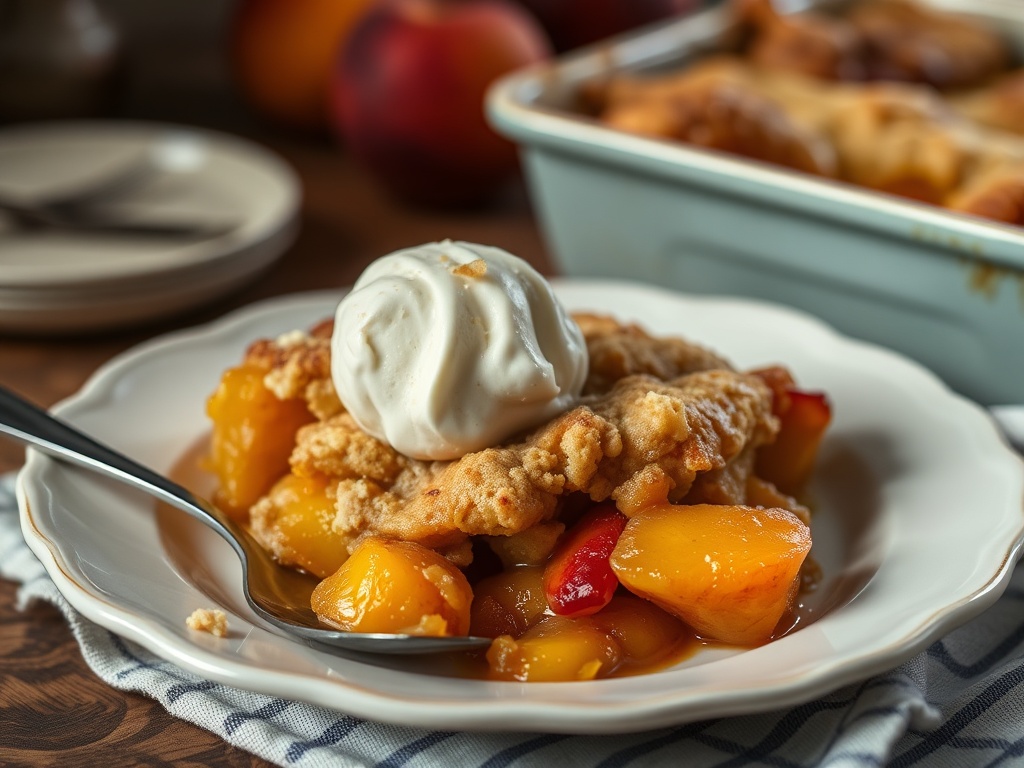
Imagine a warm, bubbling dessert, its sweet, juicy peaches nestled under a golden-brown, biscuit-like topping. This isn’t just any dessert; this is Old-Time Oven Peach Cobbler, a culinary hug that transports you back to simpler times. It’s the kind of dish that evokes memories of grandma’s kitchen, Sunday dinners, and the comforting aroma of home baking filling every corner. More than just a recipe, it’s a legacy, a testament to the enduring power of classic, uncomplicated flavors.
What makes this particular cobbler “old-time” is its commitment to tradition. We’re talking about ripe, succulent peaches, often peeled for that silky smooth texture, seasoned simply to let their natural sweetness shine. The star, however, is often the topping – a rustic, biscuit-style crust, rich with butter or shortening, that bakes up delightfully tender on the inside and perfectly crisp on the outside. It’s a dessert that eschews fussy techniques for honest, robust flavor, proving that true deliciousness often lies in the fundamentals.
By following this recipe, you’re not just baking a dessert; you’re creating an experience. You’ll gain a foolproof method for a truly delicious, crowd-pleasing peach cobbler that’s easy to master and guaranteed to bring smiles and satisfied sighs to everyone at your table. Get ready to fill your home with the irresistible scent of summer and timeless comfort.
Nutritional Information
Per serving (approximate values):
- Calories: 350
- Protein: 4g
- Carbohydrates: 55g
- Fat: 14g
- Fiber: 3g
- Sodium: 280mg
Ingredients
For the Peach Filling:
- 6-8 ripe fresh peaches (about 2.5-3 lbs), peeled, pitted, and sliced about ½-inch thick
- ½ cup granulated sugar (adjust to sweetness of peaches)
- ¼ cup packed light brown sugar
- 1 tablespoon all-purpose flour or cornstarch (for thickening)
- 1 teaspoon fresh lemon juice
- ½ teaspoon ground cinnamon
- ¼ teaspoon ground nutmeg
- Pinch of salt
- 2 tablespoons unsalted butter, cut into small pieces
For the Old-Time Biscuit Topping:
- 1 ½ cups all-purpose flour
- ¼ cup granulated sugar, plus 1 tablespoon for sprinkling
- 1 tablespoon baking powder
- ½ teaspoon salt
- ½ cup (1 stick) unsalted butter, very cold and cut into ½-inch cubes (or ½ cup cold shortening/lard)
- ½ cup whole milk (or buttermilk for a tangier flavor)
Instructions
- Prepare the Peaches: If using fresh peaches, bring a large pot of water to a boil. Prepare an ice bath. Carefully drop peaches into boiling water for 30-60 seconds, then immediately transfer to the ice bath. The skins should slip off easily. Peel, pit, and slice the peaches into ½-inch thick wedges.
- Season the Filling: In a large bowl, combine the sliced peaches with ½ cup granulated sugar, brown sugar, flour (or cornstarch), lemon juice, cinnamon, nutmeg, and a pinch of salt. Toss gently to coat all the peach slices evenly. Set aside.
- Preheat Oven & Prepare Dish: Preheat your oven to 375°F (190°C). Lightly butter a 9×13 inch baking dish or a 2-quart capacity oven-safe dish (cast iron skillet works wonderfully).
- Make the Biscuit Topping: In a medium bowl, whisk together the flour, ¼ cup granulated sugar, baking powder, and ½ teaspoon salt.
- Cut in the Fat: Add the cold, cubed butter (or shortening/lard) to the dry ingredients. Using a pastry blender, two knives, or your fingertips, cut the fat into the flour mixture until it resembles coarse crumbs with some pea-sized pieces remaining. This is crucial for a tender, flaky topping.
- Add Liquid to Topping: Gradually pour in the milk, stirring with a fork until just combined. Be careful not to overmix; the dough will be shaggy and slightly sticky.
- Assemble the Cobbler: Pour the seasoned peach filling into the prepared baking dish, spreading it into an even layer. Dot the top of the peaches with the 2 tablespoons of unsalted butter pieces.
- Top the Peaches: Drop spoonfuls of the biscuit dough over the peach filling. You can gently flatten them slightly or leave them rustic and mounded. Don’t worry about covering every inch; the gaps allow the fruit to bubble through and create a beautiful, old-time appearance.
- Bake the Cobbler: Sprinkle the remaining 1 tablespoon of granulated sugar evenly over the biscuit topping. Place the dish on a baking sheet (to catch any potential drips) and bake for 40-50 minutes, or until the topping is golden brown and the fruit filling is bubbly and tender when pierced with a knife or skewer.
- Cool and Serve: Remove the cobbler from the oven and let it rest for at least 15-20 minutes before serving. This allows the juices to set and prevents it from being too runny. Serve warm with your favorite accompaniments.
Cooking Tips and Variations
For the truest “old-time” flavor and texture, opt for fresh, ripe peaches when they are in season. If using canned peaches, drain them very well and reduce the sugar in the filling by about half, tasting as you go. For frozen peaches, thaw them completely and drain any excess liquid before using. To prevent a soggy bottom, some bakers like to sprinkle a thin layer of flour or cornstarch directly onto the bottom of the baking dish before adding the fruit. When making the biscuit topping, remember that cold fat is your friend; it creates steam during baking, leading to a flakier crust. Avoid overworking the dough, as this can develop the gluten too much and result in a tough topping. For an extra rich topping, a combination of butter and shortening can be used. Experiment with spices: a touch of cardamom or ginger can add a wonderful warmth. For a nutty crunch, fold in ½ cup of chopped pecans or walnuts into the biscuit dough or sprinkle them over the peaches before adding the topping. You can also make this a mixed fruit cobbler by adding a cup of fresh berries (raspberries, blueberries, or blackberries) to the peach filling for an extra burst of flavor and color.
Storage and Reheating
Leftover Old-Time Oven Peach Cobbler can be stored at room temperature, loosely covered, for up to 1 day. For longer storage, cover tightly with plastic wrap or aluminum foil and refrigerate for up to 3-4 days. To reheat, you can warm individual servings in the microwave for 30-60 seconds until heated through. For a crisper topping, reheat the entire cobbler (or larger portions) in an oven preheated to 300°F (150°C) for 15-20 minutes, or until warmed through and the topping has re-crisped. If the topping starts to brown too much, you can loosely tent it with foil. This cobbler also freezes well; once completely cooled, wrap individual portions or the entire dish tightly in plastic wrap and then foil. It can be frozen for up to 3 months. Thaw overnight in the refrigerator before reheating.
Frequently Asked Questions
Why do you recommend peeling the peaches?
Peeling the peaches is a traditional step for old-time cobblers. It results in a smoother, more refined texture to the fruit filling, as peach skins can become tough or stringy after baking. While optional, it contributes to the classic experience.
Can I use a different type of fat for the biscuit topping?
Absolutely! While butter provides excellent flavor, shortening or lard were historically common and will give you an incredibly tender and flaky crust. A 50/50 blend of butter and shortening can offer the best of both worlds – flavor from butter and flakiness from shortening.
My cobbler topping didn’t get golden brown. What went wrong?
Several factors could contribute to this. Ensure your oven temperature is accurate (an oven thermometer can help). You might also need to bake it for a few extra minutes, or if the fruit is bubbling but the top isn’t browned, you can move the cobbler to a higher rack in the oven for the last 5-10 minutes, keeping a close eye on it.
How can I prevent the fruit filling from being too watery?
Using a tablespoon of flour or cornstarch in the filling helps to thicken the juices as they cook. Additionally, ensuring your peaches are ripe but not overly soft will prevent them from releasing too much liquid. Allowing the cobbler to rest after baking is also crucial, as the juices will thicken further as it cools.