Introduction
There are few culinary delights that evoke a sense of luxury and celebration quite like lobster tails. These succulent, sweet morsels of seafood are often reserved for special occasions or enjoyed at high-end restaurants, but what if we told you that preparing restaurant-quality lobster tails at home is not only achievable but surprisingly simple? Forget the intimidation; with the right techniques, you can transform these impressive crustaceans into an unforgettable meal that will wow your guests and satisfy your cravings for gourmet dining.
Lobster tails represent the pinnacle of convenience and concentrated flavor when it comes to enjoying lobster. Unlike wrestling with a whole live lobster, tails offer a straightforward path to that coveted, tender meat. They are versatile enough to star as a sophisticated entrée, elevate a classic surf and turf, or even lend their delicate sweetness to pasta dishes. Often found frozen, they are more accessible than you might think, making that dream of an elegant seafood dinner a tangible reality right in your own kitchen.
This guide is your passport to mastering the art of cooking lobster tails. We’ll demystify the process, from selecting the best tails to effortlessly preparing them for cooking, and then guiding you through a method that guarantees tender, flavorful results every single time. By the end, you’ll possess the confidence and know-how to unlock the incredible sweetness of lobster tails, turning an impressive dish into your new culinary signature.
Nutritional Information
Per serving (approximate values for two 5 oz tails with butter sauce):
- Calories: 350
- Protein: 35g
- Carbohydrates: 1g
- Fat: 23g
- Fiber: 0g
- Sodium: 600mg
Ingredients
- 2-4 cold water lobster tails (4-6 oz each)
- 4 tablespoons unsalted butter, melted
- 2 cloves garlic, minced (optional)
- 1 tablespoon fresh lemon juice
- 1 tablespoon fresh parsley or chives, chopped (for garnish)
- Salt and freshly ground black pepper, to taste
- Lemon wedges, for serving
Instructions
- Thaw the Lobster Tails: If using frozen lobster tails, the best method is to thaw them overnight in the refrigerator. For a quicker thaw, place the sealed frozen tails in a bowl of cold water, changing the water every 30 minutes, until fully defrosted (this typically takes 30-60 minutes). Never use hot water, as it can partially cook the lobster.
- Prepare the Lobster Tails (Butterfly Method): Using sharp kitchen shears, carefully cut down the center of the top shell of each lobster tail, from the wide end down to the beginning of the tail fin. Be careful not to cut through the meat or the bottom shell.
- Loosen the Meat: Gently open the cut shell. Using your fingers, carefully separate the meat from the inside of the shell, keeping it attached at the very end of the tail.
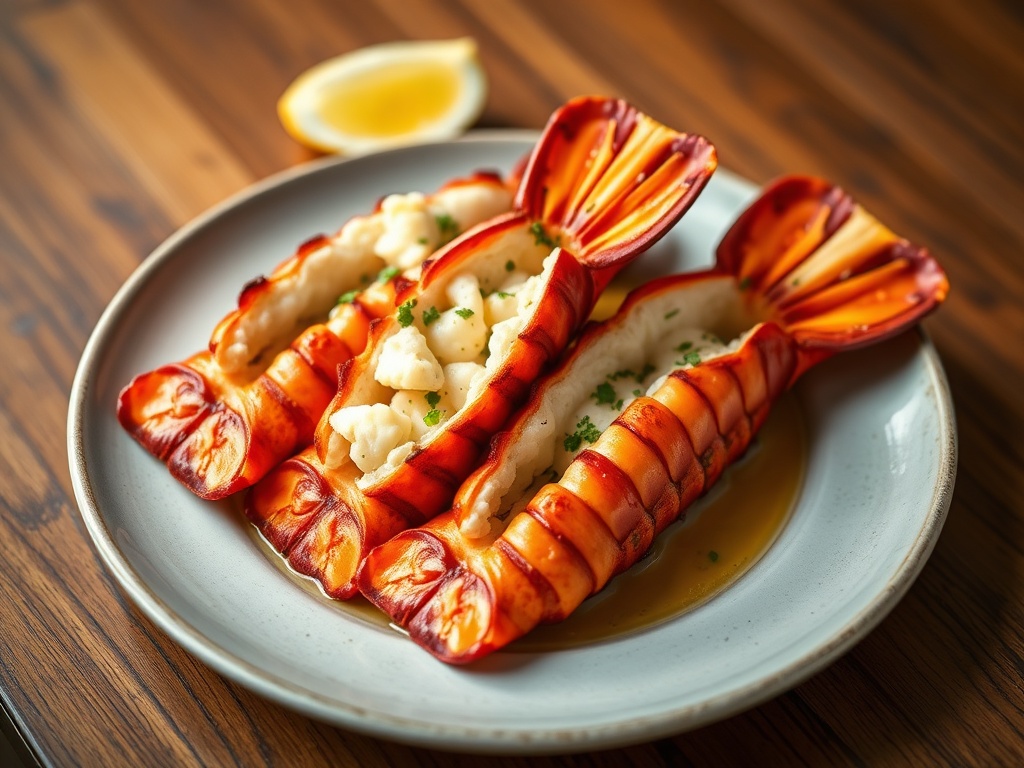
- Lift and Rest the Meat: Lift the lobster meat up and out of the shell, then rest it on top of the cut shell. You can gently press the shell halves together underneath the meat to create a sturdy bed. This “butterflied” presentation allows the meat to cook evenly and makes for a beautiful display. If a dark digestive vein is visible, gently pull it out and discard.
- Preheat Broiler: Position an oven rack about 6-8 inches from the broiler element. Preheat your broiler to high.
- Prepare Flavoring: In a small bowl, combine the melted butter, minced garlic (if using), and fresh lemon juice. Stir well.
- Season the Lobster: Place the prepared lobster tails on a baking sheet. Brush the exposed lobster meat generously with the butter-garlic-lemon mixture. Season lightly with salt and freshly ground black pepper.
- Broil the Lobster: Place the baking sheet with the lobster tails under the preheated broiler. Broil for approximately 6-10 minutes, depending on the size of your tails.
- Check for Doneness: The lobster is cooked when the shell turns bright red and the meat becomes opaque white and firm, but still slightly springy to the touch. The internal temperature should register 140-145°F (60-63°C) at its thickest part. Be vigilant to avoid overcooking, as this will result in tough, rubbery meat.
- Rest and Serve: Once cooked, remove the lobster tails from the oven. Let them rest for a minute or two. Garnish with fresh chopped parsley or chives. Serve immediately with extra lemon wedges and, if desired, additional melted butter for dipping.
Cooking Tips and Variations
The key to perfect lobster tails lies in avoiding overcooking. Always err on the side of undercooking slightly, as you can always return them to the heat for another minute or two if needed. Visual cues are your best friend: vibrant red shells and opaque white meat are the ultimate indicators. For a truly decadent experience, consider infusing your melted butter with other aromatics. A sprig of fresh rosemary or a pinch of smoked paprika can add wonderful depth. For a touch of heat, a tiny pinch of red pepper flakes stirred into the butter mixture before brushing can elevate the flavor profile without overwhelming the delicate sweetness of the lobster. If you’re feeling adventurous, try making a compound butter by blending softened butter with finely chopped herbs like tarragon or dill, a squeeze of lemon, and a dash of white wine for an extra layer of gourmet flavor. Another tip for even cooking, especially with larger tails, is to place a small piece of aluminum foil over the thinner end of the tail during the last few minutes of broiling to prevent it from cooking faster than the thicker part. Always use cold water lobster tails for the best results; their meat is sweeter and more tender than warm water varieties.
Storage and Reheating
Cooked lobster tails are best enjoyed immediately after preparation for optimal flavor and texture. However, if you have leftovers, allow them to cool completely before storing. Place the cooked lobster meat (removed from the shell is often easiest) in an airtight container and refrigerate for up to 2 days. For reheating, gentle methods are crucial to prevent the lobster from becoming tough. The best way to reheat is to place the lobster meat in a baking dish with a tablespoon or two of water or butter, cover it loosely with foil, and warm it in a preheated oven at 275°F (135°C) for about 5-7 minutes, or until just heated through. Alternatively, you can gently sauté the lobster meat in a pan with a little butter or olive oil over low heat for a few minutes. Avoid microwaving, as it tends to make lobster rubbery and dry.
Frequently Asked Questions
How do I know if my lobster tails are fresh?
If buying fresh (unfrozen) lobster tails, look for tails that are firm and have a clean, ocean-like smell, not a strong “fishy” odor. The shells should be intact and free from discoloration. If buying frozen, ensure the packaging is sealed and there are no signs of freezer burn, which would indicate improper storage and potential loss of quality.
Can I boil or steam lobster tails instead of broiling?
Absolutely! Boiling and steaming are also excellent methods. For boiling, bring a large pot of salted water to a rolling boil, then add the tails and cook for 1 minute per ounce (e.g., a 5 oz tail cooks for 5 minutes). For steaming, place tails in a steamer basket over boiling water, cover, and steam for about 1 minute per ounce. Both methods yield tender, moist meat, but broiling offers a slightly caramelized exterior and a richer butter flavor.
What’s the difference between cold water and warm water lobster tails?
Cold water lobster tails (from regions like Maine, Canada, and South Africa) are generally considered superior due to their sweeter, firmer, and more succulent meat. This is because the colder waters cause lobsters to grow slower, resulting in denser meat. Warm water lobster tails (from regions like Florida and the Caribbean) tend to have a softer, sometimes mushier texture and a less pronounced sweet flavor. Always opt for cold water tails if possible for the best culinary experience.