Introduction
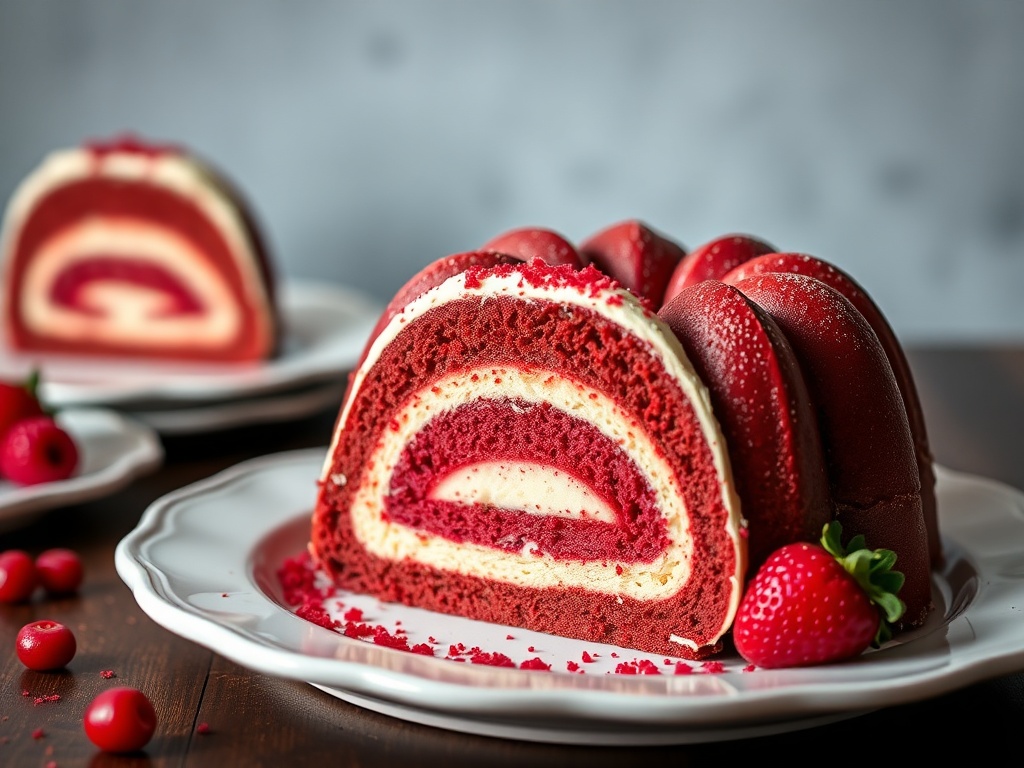
Prepare to be utterly captivated by a dessert that is as visually stunning as it is unbelievably delicious: the Layered Red Velvet Cheesecake Bundt Cake. This isn’t just a cake; it’s a celebration of indulgence, a harmonious marriage between two beloved classics that come together in a show-stopping presentation. Imagine the rich, moist, and subtly cocoa-flavored red velvet cake, famously vibrant in color, cradling a luscious, creamy, and tangy cheesecake layer, all baked to perfection in an elegant Bundt pan. Each slice reveals a beautiful cross-section, promising a delightful textural and flavor journey with every bite.
This cake transcends the ordinary, offering a sophisticated twist on familiar favorites. The red velvet, with its characteristic tender crumb and hint of chocolate, provides a comforting foundation, while the smooth, decadent cheesecake adds a cool, creamy contrast that elevates the entire experience. It’s truly a dessert that speaks of special occasions – from holiday feasts and birthday celebrations to elegant dinner parties or simply a weekend treat when you want to impress. While its intricate layers might suggest a complex undertaking, fear not! With clear, detailed instructions and a few key baking tips, you’ll find that creating this masterpiece is not only achievable but also incredibly rewarding.
The allure of this Layered Red Velvet Cheesecake Bundt Cake lies in its unique combination of textures and flavors. The slight tang of buttermilk and vinegar in the red velvet perfectly complements the sweet and creamy cheesecake, creating a balanced profile that is neither too rich nor too sweet. Draped with a velvety cream cheese glaze, this cake is more than just a dessert; it’s an edible work of art that promises to be the undisputed star of any dessert table. Get ready to embark on a baking adventure that will leave you with a dessert that tastes as magnificent as it looks.
Nutritional Information
Per serving (approximate values):
- Calories: 620
- Protein: 9g
- Carbohydrates: 75g
- Fat: 35g
- Fiber: 2g
- Sodium: 470mg
Ingredients
Red Velvet Cake Layer Ingredients:
- 2 ½ cups (300g) all-purpose flour
- 1 ½ cups (300g) granulated sugar
- 1 tablespoon unsweetened natural cocoa powder (not Dutch-processed)
- 1 teaspoon baking soda
- ½ teaspoon salt
- 1 cup (240ml) buttermilk, at room temperature
- ½ cup (120ml) vegetable oil
- 2 large eggs, at room temperature
- 1 teaspoon vanilla extract
- 2 tablespoons red food coloring (gel preferred for vibrancy)
- 1 tablespoon white vinegar
Cheesecake Layer Ingredients:
- 8 ounces (226g) full-fat cream cheese, softened
- ¼ cup (50g) granulated sugar
- 1 large egg, at room temperature
- 1 teaspoon vanilla extract
- Pinch of salt
Cream Cheese Glaze/Frosting Ingredients (Optional but Recommended):
- 4 ounces (113g) cream cheese, softened
- 2 cups (240g) powdered sugar (confectioners’ sugar), sifted
- 2-4 tablespoons milk or cream, as needed for thinning
- ½ teaspoon vanilla extract
- Pinch of salt
Essential Equipment:
- 10-12 cup capacity Bundt Pan
- Large mixing bowls
- Medium mixing bowls
- Electric mixer (stand or hand-held)
- Whisk
- Rubber spatula
- Measuring cups and spoons
- Sifter (optional, for flour/cocoa)
- Cooling rack
- Non-stick baking spray with flour (or butter and flour for prepping pan)
Instructions
- Prepare the Bundt Pan: Generously grease a 10-12 cup Bundt pan with non-stick baking spray containing flour. Alternatively, you can coat the pan thoroughly with softened butter, ensuring all nooks and crannies are covered, then dust evenly with flour, tapping out any excess. This step is crucial for a clean release.
- Make the Cheesecake Layer: In a medium mixing bowl, using an electric mixer on medium speed, beat the softened cream cheese until smooth and creamy, about 1-2 minutes. Add the ¼ cup granulated sugar and continue beating until well combined. Beat in the egg, vanilla extract, and a pinch of salt until just incorporated. Be careful not to overmix, as this can introduce too much air, which may cause the cheesecake to crack during baking. Set aside.
- Make the Red Velvet Cake Batter (Dry Ingredients): In a large mixing bowl, whisk together the all-purpose flour, 1 ½ cups granulated sugar, unsweetened cocoa powder, baking soda, and ½ teaspoon salt. If desired, sift the dry ingredients together for a lump-free batter.
- Make the Red Velvet Cake Batter (Wet Ingredients): In a separate medium bowl, whisk together the buttermilk, vegetable oil, eggs, vanilla extract, red food coloring, and white vinegar until well combined.
- Combine Red Velvet Batter: Pour the wet ingredients into the dry ingredients. Mix on low speed with an electric mixer, or by hand with a whisk or rubber spatula, until just combined and no streaks of dry flour remain. Do not overmix; overmixing can lead to a tough cake. The batter will be thick and vibrant red.
- Layer the Cake: Pour approximately half (about 2 cups) of the red velvet cake batter into the prepared Bundt pan, spreading it evenly across the bottom.
- Add the Cheesecake Layer: Carefully spoon the cheesecake mixture over the red velvet batter. It’s important to leave about a ½-inch border around the edges, ensuring the cheesecake does not touch the sides of the Bundt pan directly. This helps prevent the cheesecake from sticking to the pan and makes for a cleaner separation of layers. A piping bag with the end snipped off can help for more precise placement.
- Top with Remaining Red Velvet Batter: Gently spoon or pour the remaining red velvet batter over the cheesecake layer, spreading it carefully to cover the cheesecake completely. You can gently swirl with a knife for a marbled effect if desired, but for distinct layers, simply cover.
- Prepare for Baking: Gently tap the Bundt pan a few times on the counter to release any large air bubbles.
- Bake the Cake: Preheat your oven to 350°F (175°C). Place the Bundt pan on a baking sheet (to catch any potential drips). Bake for 55-70 minutes, or until a wooden skewer or toothpick inserted into the red velvet cake portion comes out with moist crumbs, but no wet batter. For the cheesecake layer, it should be mostly set but may still have a slight jiggle in the center, which is normal as it will firm up upon cooling.
- Cool the Cake: Once baked, remove the cake from the oven and let it cool in the Bundt pan on a wire rack for at least 15-20 minutes. This allows the cake to set and firm up before inversion.
- Invert the Cake: After the initial cooling period, place the wire rack on top of the Bundt pan and carefully invert the cake onto the rack. Lift the Bundt pan off the cake. If it sticks, gently tap the pan on the counter or use a thin, offset spatula to loosen any edges. Allow the cake to cool completely on the wire rack before glazing, typically for at least 1-2 hours.
- Prepare the Cream Cheese Glaze (if using): While the cake cools, in a medium bowl, beat the softened cream cheese with an electric mixer until smooth. Gradually add the sifted powdered sugar, beating until well combined. Add the vanilla extract, pinch of salt, and 2 tablespoons of milk or cream, beating until smooth. If the glaze is too thick, add more milk or cream, one teaspoon at a time, until it reaches a pourable but still thick consistency.
- Glaze and Serve: Once the cake is completely cool, drizzle the cream cheese glaze generously over the top, allowing it to drip down the fluted sides. For an extra touch, garnish with chocolate shavings, fresh berries, or a dusting of cocoa powder. Slice with a long, sharp serrated knife, cleaning the knife between slices for the neatest presentation. Serve at room temperature or slightly chilled.
Cooking Tips and Variations
Temperature Matters: This is perhaps the most crucial tip for baking success. Ensure all cold ingredients, especially the cream cheese, buttermilk, and eggs, are at room temperature. Room temperature ingredients emulsify better, creating a smoother, more uniform batter and a finer crumb in your cake. Cold cream cheese will result in a lumpy cheesecake layer, and cold eggs can affect the cake’s texture.
Don’t Overmix: This applies to both the red velvet cake batter and the cheesecake filling. For the cake, overmixing develops the gluten too much, leading to a tough, dry cake. Mix until just combined. For the cheesecake, overmixing introduces too much air, which can cause it to puff up excessively in the oven and then crack as it cools. Beat until just smooth and combined.
Bundt Pan Prep is Paramount: A perfectly prepped Bundt pan is your best friend. Use a high-quality non-stick baking spray with flour (like Baker’s Joy or Pam Baking) or meticulously grease every curve and crevice with softened butter, then dust thoroughly with flour, tapping out the excess. For red velvet, some bakers prefer dusting with cocoa powder instead of flour to avoid white residue on the dark red cake. Don’t skip this step, as a stuck cake is a baker’s nightmare!
Red Food Coloring Choice: For the most vibrant and rich red color, opt for gel food coloring over liquid. Gel food coloring is much more concentrated, meaning you’ll use less of it, which prevents adding excess liquid to your batter that could alter its consistency and texture. A good quality gel will give you that deep, classic red velvet hue.
Layering Technique: Be gentle when adding the cheesecake layer. If you find it too challenging to spoon it neatly, consider using a piping bag (even a large Ziploc bag with a corner snipped off) to pipe the cheesecake mixture over the red velvet batter. Remember to leave that crucial border around the edge of the pan so the cheesecake doesn’t touch the pan directly, which helps prevent sticking and ensures distinct layers.
Oven Thermometer: Ovens can be notoriously inaccurate. Investing in an inexpensive oven thermometer will ensure your oven is truly at the temperature you set, which is vital for consistent baking results, especially for a layered cake like this.
Toothpick Test for Layered Cakes: When checking for doneness, insert a wooden skewer or toothpick into the red velvet cake portion, avoiding the center where the cheesecake is. It should come out with moist crumbs attached, but no wet batter. The cheesecake layer itself will appear mostly set but might still have a slight jiggle in the very center; this is normal and it will firm up completely as it cools.
Cooling Patience: Resist the urge to invert the cake too soon. Allowing it to cool in the pan for the recommended 15-20 minutes allows the cake to firm up and pull away from the sides, making for an easier, cleaner release. Then, cool completely on a wire rack before attempting to glaze or slice. A warm cake will absorb the glaze unevenly or crumble when cut.
Variations & Customizations:
- Flavor Boosts: Add ½ teaspoon of espresso powder to the red velvet batter to deepen its chocolate notes without making it taste like coffee. For a brighter cheesecake, add 1 teaspoon of orange zest to the cheesecake mixture.
- Glaze Alternatives: Instead of the cream cheese glaze, you could drizzle with a simple vanilla glaze (powdered sugar, milk, vanilla), a rich chocolate ganache, or simply dust the cooled cake with powdered sugar for a minimalist presentation.
- Mini Bundts: This recipe can be adapted for mini Bundt pans. Fill each mini pan about two-thirds full, layering similarly. Baking time will be significantly reduced, likely 20-30 minutes, so keep a close eye on them.
- Garnish Ideas: Elevate the presentation with a sprinkle of toasted pecans, elegant white chocolate curls, a scattering of fresh raspberries or strawberries, or even a light dusting of cocoa powder over the glaze.
- Gluten-Free Option: For a gluten-free version, substitute the all-purpose flour with a 1:1 gluten-free all-purpose flour blend that contains xanthan gum. Be aware that the texture might be slightly different, but it can still yield a delicious result.
Storage and Reheating
Storage: Due to the cream cheese component in both the cheesecake layer and the glaze, this cake must be stored in the refrigerator. Once completely cooled and glazed, cover the cake loosely with plastic wrap or place it in an airtight cake carrier. It will stay fresh for up to 4-5 days in the refrigerator. The cake actually tastes wonderful chilled, but for optimal flavor and texture, you might want to let slices come to room temperature for about 20-30 minutes before serving.
Freezing: This cake freezes surprisingly well, especially without the glaze. To freeze, ensure the cake is completely cooled. Wrap it tightly in several layers of plastic wrap, then an additional layer of aluminum foil. You can freeze the whole cake or individual slices. It can be stored in the freezer for up to 1 month. Thaw overnight in the refrigerator before glazing (if freezing unglazed) and serving. If freezing glazed, the glaze might become a bit watery upon thawing, but the cake will still be delicious.
Reheating: There is no need to reheat this cake. It is best served at room temperature or slightly chilled directly from the refrigerator. Reheating could cause the cheesecake layer to weep or alter the texture of the cake. If you prefer it less cold, simply let a slice sit out at room temperature for 20-30 minutes before enjoying.
Frequently Asked Questions
Why did my cheesecake layer crack?
There are a few common reasons for cheesecake cracking. The most frequent culprit is overmixing the cheesecake batter, which incorporates too much air. As the cheesecake bakes, this air expands and then collapses as it cools, leading to cracks. Another reason could be baking at too high a temperature, causing the cheesecake to bake too quickly and dry out the surface. Lastly, sudden temperature changes or cooling too quickly can also contribute to cracking. To prevent this, ensure ingredients are at room temperature, beat only until just combined, and allow the cake to cool gradually.
Can I make this cake ahead of time?
Absolutely! This Layered Red Velvet Cheesecake Bundt Cake is an excellent make-ahead dessert. You can bake the cake up to 2-3 days in advance. Once baked and completely cooled, wrap it tightly and store it in the refrigerator. Prepare the cream cheese glaze and apply it just a few hours before serving for the freshest look, or you can glaze it a day in advance as well. The flavors often deepen and meld beautifully overnight.
My Bundt cake stuck to the pan, what went wrong?
A stuck Bundt cake is a common frustration, and it almost always comes down to pan preparation. The most likely reasons are insufficient greasing and flouring, using an old or scratched non-stick pan, or not allowing the cake to cool long enough in the pan before inverting. Ensure you use a high-quality non-stick spray with flour or meticulously grease every crevice with softened butter and dust thoroughly with flour. Don’t rush the cooling process; the cake needs time to firm up and pull away from the pan’s sides.
Can I use liquid red food coloring instead of gel?
While you can use liquid red food coloring, it’s not recommended for achieving the most vibrant, classic red velvet color. Liquid food coloring is less concentrated, meaning you’d need to use a significantly larger amount (often 3-4 times more) to get a similar hue. Adding too much liquid can alter the consistency of your batter, potentially making it too thin and affecting the final texture of the cake. Gel food coloring provides a much more intense color with less volume, preserving the integrity of the batter.