Introduction
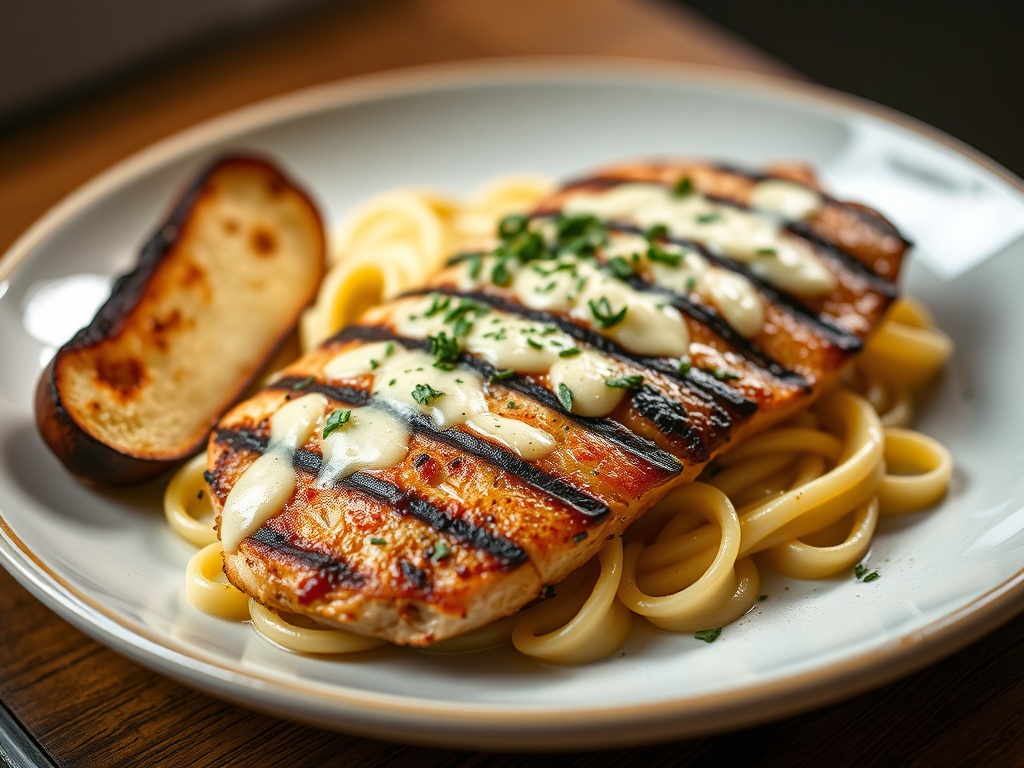
There are some dishes that just speak to the soul, offering a warm embrace on a chilly evening or a satisfying end to a busy day. Our Grilled Chicken with Creamy Cheese Rigatoni is precisely that kind of meal – a true comfort food classic, reimagined and elevated for the modern home cook. This isn’t just another pasta dish; it’s a symphony of textures and flavors, where the smoky char of perfectly grilled chicken meets the luxurious, velvety embrace of a rich, cheesy rigatoni. It’s a dish that manages to feel both incredibly indulgent and surprisingly achievable, making it a perfect candidate for quick weeknight dinners or even more special occasions when you want to impress without the stress.
What makes this dish so special is the beautiful contrast it presents. The chicken, infused with a bright and herbaceous marinade, offers a robust and savory counterpoint to the creamy, unctuous pasta. Each bite delivers a harmonious blend of tender protein and perfectly al dente rigatoni, generously coated in a sauce that clings to every ridge and crevice. It’s a meal that satisfies on every level, from the initial aroma that fills your kitchen to the last delicious forkful. While it tastes like something you’d order at a high-end trattoria, we’re here to show you just how simple it is to bring this culinary delight to your own table.
Whether you’re a seasoned chef or a beginner in the kitchen, this recipe is designed for success. We’ll guide you through each step, from crafting the ideal chicken marinade to perfecting a truly irresistible cheese sauce. Get ready to transform everyday ingredients into an extraordinary meal that will undoubtedly become a new family favorite. Prepare to indulge in a dish that balances hearty satisfaction with an elegant touch, proving that comfort food can indeed be a gourmet experience.
Nutritional Information
Per serving (approximate values):
- Calories: 720
- Protein: 55g
- Carbohydrates: 60g
- Fat: 30g
- Fiber: 4g
- Sodium: 850mg
Ingredients
- 1.5 lbs boneless, skinless chicken breasts or thighs
- 1 lb rigatoni pasta
- 2 tablespoons olive oil, plus more for grilling
- 1 lemon, juiced
- 3 cloves garlic, minced (divided)
- 1 teaspoon dried oregano
- 1/2 teaspoon dried thyme
- Salt and freshly ground black pepper to taste
- 4 tablespoons unsalted butter
- 3 tablespoons all-purpose flour
- 3 cups whole milk, warmed
- 1 cup heavy cream
- 1/2 cup grated Fontina cheese
- 1/2 cup grated Gruyère cheese
- 1/4 cup grated Parmesan cheese, plus more for garnish
- 1/4 teaspoon ground nutmeg
- 1/4 cup fresh parsley, chopped, for garnish
- Optional: Pinch of red pepper flakes
Instructions
- Prepare the Chicken Marinade: In a medium bowl, whisk together 2 tablespoons of olive oil, lemon juice, 2 cloves of minced garlic, dried oregano, dried thyme, 1/2 teaspoon salt, and 1/4 teaspoon black pepper.
- Marinate the Chicken: Add the chicken breasts or thighs to the marinade, ensuring they are fully coated. Cover the bowl and refrigerate for at least 30 minutes, or ideally 2-4 hours, to allow the flavors to meld and tenderize the chicken.
- Preheat the Grill: Preheat your grill to medium-high heat (around 400°F / 200°C). Clean the grill grates thoroughly with a wire brush and then lightly oil them to prevent sticking.
- Grill the Chicken: Remove the chicken from the marinade, letting any excess drip off. Place the chicken on the preheated grill. Cook for 5-7 minutes per side for chicken breasts, or 6-8 minutes per side for chicken thighs, until beautiful char marks appear and the internal temperature reaches 165°F (74°C).
- Rest the Chicken: Once cooked, transfer the chicken to a cutting board, tent loosely with foil, and let it rest for 5-10 minutes. This is crucial for keeping the chicken juicy.
- Cook the Rigatoni: While the chicken is grilling, bring a large pot of generously salted water to a rolling boil. Add the rigatoni and cook according to package directions until al dente. Before draining, reserve 1 cup of the pasta cooking water. Drain the pasta and set aside.
- Start the Cheese Sauce Base: In a large saucepan or Dutch oven, melt the unsalted butter over medium heat. Add the remaining 1 clove of minced garlic and sauté for 1 minute until fragrant.
- Make the Roux: Whisk in the all-purpose flour and cook for 1-2 minutes, stirring constantly, to create a light roux. This will help thicken the sauce.
- Add Liquids: Gradually whisk in the warmed whole milk, a little at a time, ensuring no lumps form. Continue whisking until the sauce begins to thicken slightly. Stir in the heavy cream.
- Melt the Cheeses: Reduce the heat to low. Add the Fontina, Gruyère, and Parmesan cheeses (reserving some Parmesan for garnish) to the sauce. Stir continuously until the cheeses are completely melted and the sauce is smooth and creamy.
- Season the Sauce: Season the cheese sauce with salt, freshly ground black pepper, and the ground nutmeg. If desired, add a pinch of red pepper flakes for a subtle kick.
- Adjust Sauce Consistency: If the sauce is too thick, add a splash of the reserved pasta water, a tablespoon at a time, until it reaches your desired consistency.
- Combine Pasta and Sauce: Add the drained rigatoni directly into the cheese sauce. Toss gently to ensure every piece of pasta is thoroughly coated.
- Slice the Chicken: Slice the rested grilled chicken against the grain into thin strips or bite-sized pieces.
- Assemble and Serve: Divide the creamy cheese rigatoni among serving bowls. Top each serving generously with the sliced grilled chicken.
- Garnish: Garnish with fresh chopped parsley and an extra sprinkle of grated Parmesan cheese. Serve immediately and enjoy!
Cooking Tips and Variations
For the juiciest chicken, remember that resting period after grilling is non-negotiable. It allows the juices to redistribute, ensuring every slice is tender and flavorful. Don’t skip it! When making the cheese sauce, always add the cheese off the heat or over very low heat to prevent it from clumping or becoming grainy. A gentle, gradual melt is key to a velvety smooth sauce. If you find your sauce is too thick, don’t hesitate to use a splash of that reserved pasta water; its starch content helps to emulsify the sauce beautifully.
To vary the flavor profile, consider adding sautéed mushrooms, wilted spinach, or roasted red bell peppers to your pasta sauce alongside the garlic for an extra boost of vegetables and taste. You could also experiment with different herbs in the chicken marinade, such as rosemary or sage, to impart a different aromatic quality. For those who love a bit of heat, increasing the red pepper flakes in the sauce or adding a dash of cayenne pepper can provide a welcome kick. If you prefer a richer, more umami-driven chicken, a touch of smoked paprika in the marinade can work wonders. And for a truly decadent sauce, a tablespoon of cream cheese or mascarpone melted in at the end can add an extra layer of richness and tanginess.
This dish pairs beautifully with a crisp, unoaked Chardonnay or a light-bodied Pinot Grigio, which will cut through the richness of the sauce without overpowering the delicate flavors of the chicken. If you prefer red wine, a lighter Sangiovese or a young Pinot Noir would also be a lovely complement. As for side dishes, a simple green salad with a bright vinaigrette is perfect for freshness, or some crusty garlic bread to soak up any extra sauce. Steamed asparagus or green beans also make excellent, healthy companions.
Storage and Reheating
To store any leftovers of your Grilled Chicken with Creamy Cheese Rigatoni, allow the dish to cool completely before transferring it to an airtight container. It can be stored in the refrigerator for up to 3-4 days. For best results and to maintain the quality of both the chicken and the pasta, it’s advisable to store the chicken and pasta separately if possible, though they can be stored together.
When it comes to reheating, the goal is to restore the creaminess of the sauce and prevent the chicken from drying out. The best method for reheating is on the stovetop. Transfer the desired portion to a saucepan or skillet over medium-low heat. Add a splash of milk, cream, or even chicken broth (about 1-2 tablespoons per serving) to help rehydrate the sauce. Stir gently and continuously until the pasta and chicken are heated through and the sauce has regained its creamy consistency. Avoid overheating, as this can cause the sauce to separate or become oily, and the chicken to become tough.
While microwaving is an option for convenience, it’s generally not recommended for this dish as it can often lead to dry chicken and a less desirable sauce texture. If you must use a microwave, heat in short intervals (30-60 seconds) and stir between each interval, adding a tiny splash of liquid if needed, until warmed through. Be mindful that the pasta might become softer, and the sauce might not be as smooth as when reheated on the stovetop. Always ensure the chicken is heated to a safe internal temperature of 165°F (74°C) before consuming.
Frequently Asked Questions
Can I prepare parts of this dish in advance?
Absolutely! The chicken can be marinated up to 24 hours in advance, or grilled entirely and stored in the refrigerator for 2-3 days. The cheese sauce can also be made a day ahead and gently reheated on the stovetop, adding a splash of milk or cream to loosen it up as needed. This makes it a fantastic meal prep option for busy weeknights.
What if I don’t have a grill?
No problem! You can pan-sear the chicken in a hot skillet (cast iron works best) or bake it. For pan-searing, cook the marinated chicken in a lightly oiled skillet over medium-high heat for 5-7 minutes per side until cooked through. For baking, place the marinated chicken on a baking sheet and bake at 400°F (200°C) for 20-25 minutes, or until an internal temperature of 165°F (74°C) is reached.
Can I make this dish gluten-free?
Yes, it’s easy to adapt this recipe to be gluten-free. Simply use your favorite brand of gluten-free rigatoni pasta. For the sauce, substitute the all-purpose flour with a gluten-free all-purpose flour blend (ensure it contains xanthan gum for best results) or use a cornstarch slurry (1 tablespoon cornstarch mixed with 2 tablespoons cold water) to thicken the sauce, adding it at the end to the simmering liquids.
What’s the best way to prevent the cheese sauce from clumping?
To ensure a smooth and creamy cheese sauce, there are a few key tips: always add the cheese gradually, a handful at a time, and stir constantly until melted before adding more. It’s also crucial to add the cheese off the heat or over very low heat. High heat can cause the proteins in the cheese to seize up, leading to a lumpy or grainy texture. Using freshly grated cheese rather than pre-shredded (which often contain anti-caking agents) also helps immensely.