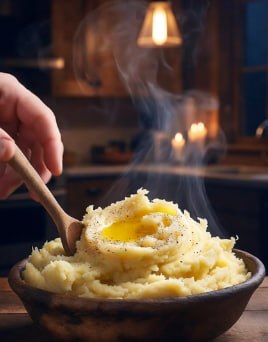
Instructions
- Prepare the Potatoes: Place the peeled and quartered potatoes in a large pot. Cover with cold water – the water level should be about an inch above the potatoes. Add a generous pinch of salt to the water.
- Boil the Potatoes: Bring the pot to a boil over high heat. Once boiling, reduce the heat to medium and continue to cook until the potatoes are fork-tender. This usually takes about 15-20 minutes. A fork should easily slide into the center of a potato piece.
- Drain the Potatoes: Carefully drain the potatoes in a colander. Return the drained potatoes to the empty pot.
- Dry the Potatoes (Optional but Recommended): Place the pot with the drained potatoes back on the stovetop over low heat for about 1-2 minutes, stirring constantly. This helps to evaporate any excess moisture, resulting in fluffier mashed potatoes. Be careful not to burn the potatoes.
- Mash the Potatoes: Remove the pot from the heat. Add the softened or melted butter to the potatoes. Using a potato masher or a ricer, begin to mash the potatoes. If using a masher, work until most of the lumps are gone. If using a ricer, press the potatoes through the ricer into the pot.
- Add Milk and Seasoning: Gradually add the milk to the mashed potatoes, stirring until smooth and creamy. Be careful not to overmix, as this can make the potatoes gluey. Season with salt and ground black pepper to taste. Start with about 1/2 teaspoon of salt and 1/4 teaspoon of pepper, then adjust as needed.
- Adjust Consistency: If the mashed potatoes are too thick, add a little more milk until you reach your desired consistency. If they are too thin, you can cook them over low heat for a minute or two, stirring constantly, to evaporate some of the liquid.
- Serve Immediately: For the best flavor and texture, serve the mashed potatoes immediately. If you need to keep them warm, see the tips below.
Cooking Tips and Variations
Achieving the perfect mashed potato texture is both an art and a science. Here are some tips and tricks to ensure your mashed potatoes are a culinary triumph:
Potato Variety Matters
The type of potato you use will significantly impact the final texture. Starchy potatoes like Russets are ideal for fluffy mashed potatoes because they absorb more liquid. Yukon Golds, with their slightly waxy texture, produce creamy and flavorful mashed potatoes. Red potatoes, being the waxiest, are not the best choice for mashing as they tend to become gummy.
Drain Thoroughly
After boiling, it’s crucial to drain the potatoes very well. Excess water will dilute the flavor and create a watery texture. As mentioned in the instructions, briefly drying the potatoes in the pot over low heat can help remove any remaining moisture.
Avoid Overmixing
Overmixing is the enemy of fluffy mashed potatoes. When potatoes are overmixed, they release too much starch, resulting in a gluey or gummy texture. Use a gentle hand and mix only until the potatoes are smooth and creamy.
Warm Milk and Butter
Using cold milk or butter can lower the temperature of the potatoes and prevent them from absorbing the dairy properly. Warm the milk in a saucepan or microwave before adding it to the potatoes. Softened or melted butter will also incorporate more easily and create a smoother consistency.
Season Generously
Salt and pepper are essential for bringing out the flavor of the potatoes. Don’t be afraid to season generously, tasting and adjusting as needed. You can also add other seasonings, such as garlic powder, onion powder, or herbs, to customize the flavor.
Keeping Mashed Potatoes Warm
If you’re not serving the mashed potatoes immediately, you can keep them warm in a slow cooker on the “warm” setting or in a double boiler. Stir them occasionally to prevent a skin from forming. You can also add a pat of butter on top to help keep them moist.
Variations
- Garlic Mashed Potatoes: Add 2-3 cloves of minced garlic to the pot while the potatoes are boiling, or roast the garlic and mash it in with the potatoes.
- Sour Cream and Chive Mashed Potatoes: Substitute 1/4 cup of the milk with sour cream and stir in 2 tablespoons of chopped fresh chives.
- Cheese Mashed Potatoes: Stir in 1/2 cup of shredded cheddar cheese, Parmesan cheese, or Gruyere cheese.
- Herb Mashed Potatoes: Add 2 tablespoons of chopped fresh herbs, such as rosemary, thyme, or parsley.
- Brown Butter Mashed Potatoes: Brown the butter in a saucepan before adding it to the potatoes for a nutty, rich flavor.
Storage and Reheating
Leftover mashed potatoes can be stored in an airtight container in the refrigerator for up to 3-4 days. To reheat, you can use the microwave, stovetop, or oven.
Microwave
Place the mashed potatoes in a microwave-safe dish and add a splash of milk or cream to help them rehydrate. Cover the dish and microwave on medium power for 2-3 minutes, stirring occasionally, until heated through.
Stovetop
Place the mashed potatoes in a saucepan and add a splash of milk or cream. Heat over low heat, stirring frequently, until heated through. Be careful not to burn the potatoes.
Oven
Preheat the oven to 350°F (175°C). Place the mashed potatoes in an oven-safe dish and add a splash of milk or cream. Cover the dish with foil and bake for 20-25 minutes, or until heated through. Remove the foil during the last few minutes to allow the top to brown slightly.
Reheated mashed potatoes may not be as creamy as freshly made ones, but they will still be delicious. Adding a little extra butter or milk during reheating can help restore some of the original texture.
Frequently Asked Questions
Why are my mashed potatoes gluey?
Gluey mashed potatoes are usually the result of overmixing. Overmixing releases too much starch from the potatoes, causing them to become sticky and gummy. To avoid this, use a gentle hand when mashing and mix only until the potatoes are smooth and creamy.
Can I use a food processor to make mashed potatoes?
While it might seem like a convenient option, using a food processor is not recommended for making mashed potatoes. The food processor can easily overmix the potatoes, resulting in a gluey texture. It’s best to use a potato masher or ricer for the best results.
How can I make mashed potatoes ahead of time?
Mashed potatoes are best served fresh, but you can make them ahead of time if needed. Prepare the mashed potatoes as directed, but undercook them slightly. Let them cool completely, then store them in an airtight container in the refrigerator. When ready to serve, reheat them using one of the methods described above, adding a little extra milk or butter to restore the creamy texture. You can also freeze mashed potatoes for longer storage.
Can I freeze mashed potatoes?
Yes, mashed potatoes can be frozen, although the texture may change slightly after thawing. To freeze, let the mashed potatoes cool completely, then transfer them to a freezer-safe container or bag. Press out any excess air and seal tightly. Freeze for up to 2-3 months. To thaw, transfer the mashed potatoes to the refrigerator and let them thaw overnight. Reheat as directed above, adding a little extra milk or butter to restore the creamy texture.