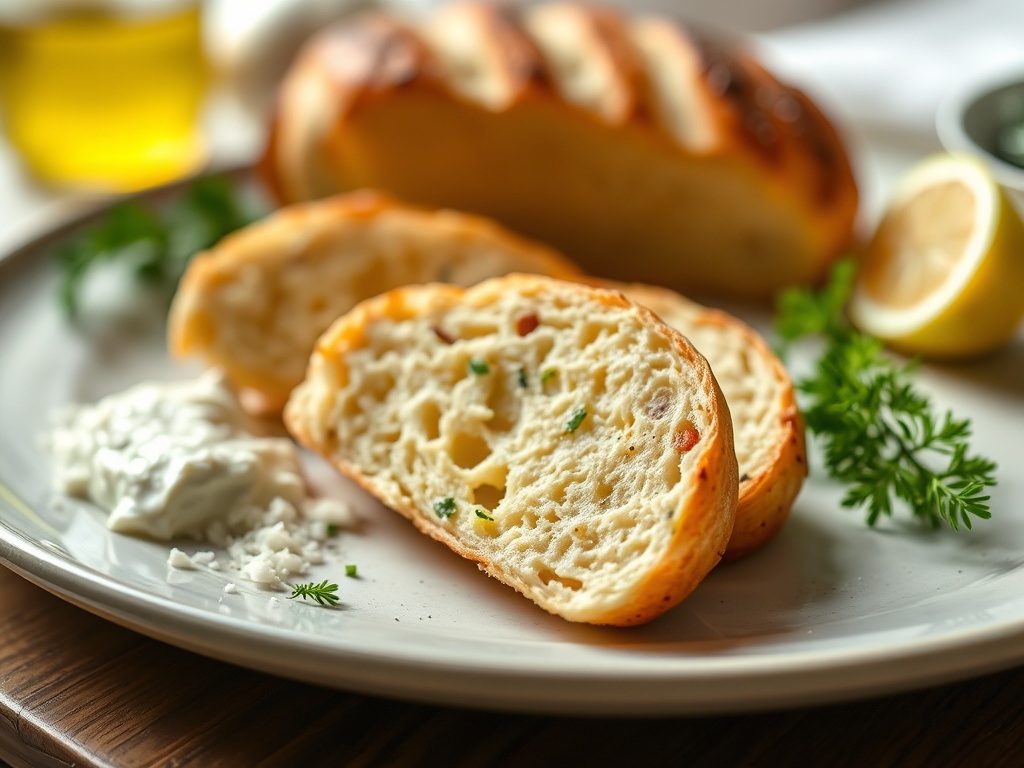
Introduction
There are few aromas as universally comforting and mouth-watering as that of freshly baked garlic bread. The golden crust, the soft, airy interior, and that intoxicating perfume of garlic and butter – it’s a culinary masterpiece that elevates almost any meal. Traditionally, making homemade bread, especially one as beloved as garlic bread, has been seen as a time-consuming endeavor, often involving vigorous kneading, multiple proofing stages, and a significant investment of active kitchen time. For many home cooks, the thought of wrestling with sticky dough and the precise art of kneading can be daunting, pushing them towards store-bought alternatives that, while convenient, often fall short of that homemade perfection.
But what if we told you there was a way to achieve that quintessential homemade garlic bread experience with minimal effort? Enter the magic of “no-knead” baking. This revolutionary method takes the hard work out of bread making, allowing time to do the heavy lifting instead of your hands. Our no-knead garlic bread recipe is designed to be your new go-to, delivering a spectacularly crusty exterior, a wonderfully chewy and tender crumb, and an explosion of garlicky flavor, all with just minutes of active preparation. Say goodbye to tired arms and hello to effortless deliciousness – your kitchen is about to become a bakery, and your taste buds are in for an absolute treat.
This recipe promises a perfectly golden, crispy-on-the-outside, soft-on-the-inside, garlic-infused bread with minimal effort. The secret lies in a long, slow fermentation process that develops gluten naturally and imparts a depth of flavor that quick-rise breads simply can’t match. You’ll be amazed at how simple it is to create such a show-stopping side dish, perfect for soaking up pasta sauces, accompanying hearty stews, or simply enjoying on its own. Get ready to impress yourself and everyone at your table with this stress-free path to homemade garlic bread nirvana.
Nutritional Information
Per serving (approximate values):
- Calories: 280
- Protein: 8g
- Carbohydrates: 45g
- Fat: 8g
- Fiber: 2g
- Sodium: 400mg
Ingredients
- 3 cups (360g) Unbleached All-Purpose Flour
- 1 ½ teaspoons Fine Sea Salt
- ½ teaspoon Instant Yeast (or Active Dry Yeast)
- 1 ½ cups (360ml) Lukewarm Water (around 105-115°F / 40-46°C)
- 4 tablespoons Unsalted Butter, melted
- 4-6 cloves Fresh Garlic, minced (about 2 tablespoons)
- 2 tablespoons Fresh Parsley, finely chopped (optional)
- ¼ cup Grated Parmesan Cheese (optional)
- 1 tablespoon Olive Oil (for brushing Dutch oven, optional)
Instructions
- In a large mixing bowl, combine the flour, salt, and instant yeast. Whisk them together thoroughly to ensure the yeast and salt are evenly distributed. This is crucial for the no-knead process.
- Pour the lukewarm water into the dry ingredients. Using a wooden spoon or spatula, mix until all the flour is hydrated and a shaggy, sticky dough forms. Do not overmix; just ensure there are no dry spots of flour remaining. The dough will be very wet and loose, which is perfectly normal for a high-hydration no-knead dough.
- Cover the bowl tightly with plastic wrap or a damp kitchen towel. Place the bowl in a warm spot in your kitchen (around 70-75°F / 21-24°C) and let it rise for 12 to 18 hours, or overnight. During this long fermentation, the dough will double or triple in size, become bubbly, and develop complex flavors and gluten structure.
- After the long rise, generously flour a clean work surface. Gently scrape the dough out of the bowl onto the floured surface. The dough will be very soft and pliable. Avoid deflating it too much.
- Lightly flour your hands and gently fold the edges of the dough towards the center to form a rough ball. Try to create some surface tension. Do not knead it.
- Place a large piece of parchment paper (about 12×12 inches) on your work surface. Carefully transfer the dough ball onto the center of the parchment paper. This will make it easier to transfer the dough to the hot Dutch oven.
- If using a Dutch oven, place it with its lid into your cold oven. Preheat the oven to 450°F (230°C). Allow the Dutch oven to preheat for at least 30 minutes once the oven reaches temperature. This ensures the Dutch oven is scorching hot, which is key for a crispy crust.
- Once the Dutch oven is preheated, carefully remove it from the oven using oven mitts. Lift the dough by the edges of the parchment paper and gently lower it into the hot Dutch oven. Be careful not to touch the hot pot.
- Cover the Dutch oven with its lid and return it to the oven. Bake for 30 minutes with the lid on. The lid traps steam, allowing the bread to expand fully and create that signature crispy crust.
- After 30 minutes, carefully remove the lid. The bread should be pale but puffed. Continue to bake for another 10-15 minutes, or until the crust is deeply golden brown and sounds hollow when tapped on the bottom.
- While the bread is baking uncovered, prepare the garlic butter. In a small bowl, combine the melted unsalted butter, minced fresh garlic, and chopped fresh parsley (if using). If using Parmesan cheese, you can add a tablespoon or two here, or save it for sprinkling later.
- Once the bread is beautifully golden, carefully remove the Dutch oven from the oven. Lift the bread out of the Dutch oven using the parchment paper and place it on a wire rack.
- Immediately and generously brush the entire surface of the hot bread with the prepared garlic butter mixture. If you saved some Parmesan, sprinkle it over the buttered crust now. The heat of the bread will melt the butter and allow the garlic flavor to infuse deeply.
- Return the bread to the oven (without the Dutch oven) for an additional 2-3 minutes, or until the garlic butter is bubbling and fragrant, and any Parmesan cheese is slightly melted and golden. This step helps to set the garlic butter and intensify the flavor.
- Remove the bread from the oven and let it cool on a wire rack for at least 15-20 minutes before slicing and serving. This cooling time is crucial for the internal structure to set, preventing a gummy texture.
Cooking Tips and Variations
The Magic of Time (No-Knead Principle): Don’t rush the rise! The long fermentation (12-18 hours) is the cornerstone of this recipe. It allows enzymes in the flour to naturally develop the gluten structure, eliminating the need for kneading. This slow process also builds a deep, complex flavor profile that quick-rise breads simply can’t achieve. Aim for an overnight rise for maximum convenience and flavor development.
Hydration is Key: No-knead doughs are inherently wetter than traditional doughs. The high hydration level (more water relative to flour) is what contributes to the open, airy crumb. When you first mix the ingredients, the dough will be very wet and shaggy – this is exactly how it should be! Resist the urge to add more flour during the initial mix, as this will result in a denser bread.
Yeast – Less is More for Slow Fermentation: A tiny amount of yeast (like the ½ teaspoon specified) is all you need for a long, slow rise. Using too much yeast will cause the dough to over-proof too quickly, leading to a less flavorful and potentially less structured bread. Always check that your yeast is active; if it doesn’t show signs of life (like a slight foam when mixed with warm water and a pinch of sugar) within 5-10 minutes, it might be expired.
The Role of Salt: Salt is not just for flavor; it’s a critical component in bread making. It controls yeast activity and strengthens the gluten network, contributing to the bread’s texture. Use a good quality fine sea salt, and don’t be tempted to omit or drastically reduce it, as it will negatively impact both the taste and structure of your bread.
Dutch Oven Advantage (for the best crust): Baking in a preheated Dutch oven is a game-changer for crust development. The sealed environment creates steam, mimicking a professional baker’s oven. This steam prevents the crust from setting too quickly, allowing the bread to expand fully and resulting in an incredibly crispy, crackly, and beautifully bronzed crust. Always preheat your Dutch oven *with* the oven for at least 30 minutes to ensure it’s scorching hot. If you don’t have a Dutch oven, you can bake the bread on a preheated baking sheet, but the crust won’t be as crisp. You can try placing a pan of hot water on the bottom rack of your oven to create some steam.
Garlic Butter Application: Applying the garlic butter towards the end of baking, or immediately after, is key. This prevents the garlic from burning and becoming bitter, allowing its sweet, pungent flavor to shine. Use fresh garlic and good quality butter for the best results. For an extra flavor boost, let the minced garlic sit in the melted butter for 5-10 minutes before brushing; this infuses the butter more deeply. A mixture of butter and a touch of olive oil can also be used for a slightly different richness.
Flour Quality: While all-purpose flour works well, using a good quality unbleached all-purpose or even bread flour can enhance the texture and chewiness of your bread. The higher protein content in bread flour contributes to a stronger gluten structure.
Don’t Over-Mix: Remember, this is a no-knead recipe! After adding the water, mix just until the flour is hydrated and no dry streaks remain. Over-mixing can actually hinder the natural gluten development process that occurs during the long fermentation.
Garlic Prep: For the most intense garlic flavor, finely mince your fresh garlic. If you prefer a milder, sweeter garlic note, you can roast the garlic cloves whole before mincing and adding to the butter. This transforms the garlic into a creamy, mellow paste.
Variations & Customizations:
- Cheesy Garlic Bread: After brushing with garlic butter, sprinkle generously with grated Parmesan, mozzarella, or a blend of Italian cheeses before the final 2-3 minute bake.
- Herbaceous Delight: Along with parsley, incorporate other fresh herbs like finely chopped rosemary, thyme, or oregano into your garlic butter mixture.
- Spicy Kick: Add a pinch of red pepper flakes to the garlic butter for a subtle warmth and heat.
- Roasted Garlic Variation: For a sweeter, less pungent garlic flavor, roast a head of garlic until soft, then squeeze out the cloves and mash them into the melted butter.
- Garlic Oil (Dairy-Free Option): For a dairy-free version, infuse good quality olive oil with minced garlic over low heat. Use this garlic oil to brush the bread instead of butter.
Storage and Reheating
Storage: No-knead garlic bread, like most homemade breads, is truly at its best when enjoyed fresh, ideally within a few hours of baking. However, if you have leftovers, you can store them at room temperature. To maintain freshness, place the cooled bread in an airtight container, a paper bag inside a plastic bag, or a bread box. It will typically stay fresh for 1-2 days. Avoid refrigerating bread, as it tends to dry out and become stale more quickly in the cold environment.
For longer storage, this bread freezes beautifully. Once completely cooled, you can freeze the whole loaf or slice it first. Wrap it tightly in plastic wrap, then an additional layer of aluminum foil, or place slices in a freezer-safe bag. It can be stored in the freezer for up to 2-3 months.
Reheating:
- From Room Temperature: To revive day-old bread, preheat your oven to 350°F (175°C). Place the bread directly on the oven rack (or wrap loosely in foil if you want a softer crust) and heat for 5-10 minutes, or until warmed through and the crust has re-crisped.
- From Frozen (Whole Loaf): If reheating a whole frozen loaf, remove all packaging. You can thaw it at room temperature for a few hours, then follow the instructions for reheating from room temperature. Alternatively, you can bake it directly from frozen: wrap the loaf tightly in aluminum foil and bake in a preheated 350°F (175°C) oven for 20-30 minutes, then unwrap and bake for another 5-10 minutes to crisp up the crust.
- From Frozen (Slices): For frozen slices, you can pop them directly into a toaster oven or even a regular toaster on a medium setting until warm and slightly crispy. Alternatively, arrange them on a baking sheet and heat in a 350°F (175°C) oven for 5-7 minutes.
Reheating the bread helps to bring back its crisp exterior and warm, soft interior, making it almost as good as fresh out of the oven. A quick brush with a little extra melted butter or olive oil before reheating can also add moisture and flavor.
Frequently Asked Questions
Can I make this dough ahead of time?
Absolutely, that’s the beauty of the no-knead method! The dough is designed for a long, slow fermentation, typically 12-18 hours at room temperature. However, you can also retard the fermentation by placing the covered bowl of dough in the refrigerator for up to 3 days after its initial 2-3 hour rise at room temperature. If refrigerating, let the dough come to room temperature for about 30-60 minutes before proceeding with shaping and baking.
What if I don’t have a Dutch oven?
While a Dutch oven is highly recommended for achieving the best crust, you can still make delicious no-knead garlic bread without one. Preheat your oven with a heavy-duty baking sheet or pizza stone inside. When it’s time to bake, carefully transfer the dough (still on its parchment paper) to the hot baking sheet or stone. To create some steam, you can place a pan with about 1 cup of boiling water on the bottom rack of your oven during the first 15 minutes of baking. The crust might not be as uniformly crisp, but it will still be fantastic.
My dough didn’t rise much, what went wrong?
Several factors can affect the rise. The most common culprit is inactive or expired yeast. Always check the expiration date on your yeast package, and if unsure, proof it separately by mixing a small amount with warm water and a pinch of sugar; if it doesn’t foam, it’s likely dead. Other reasons could include water that was too hot (killing the yeast) or too cold (inhibiting yeast activity), or a kitchen environment that was too cold for fermentation. Ensure your water is lukewarm (105-115°F / 40-46°C) and your dough is in a warm spot.