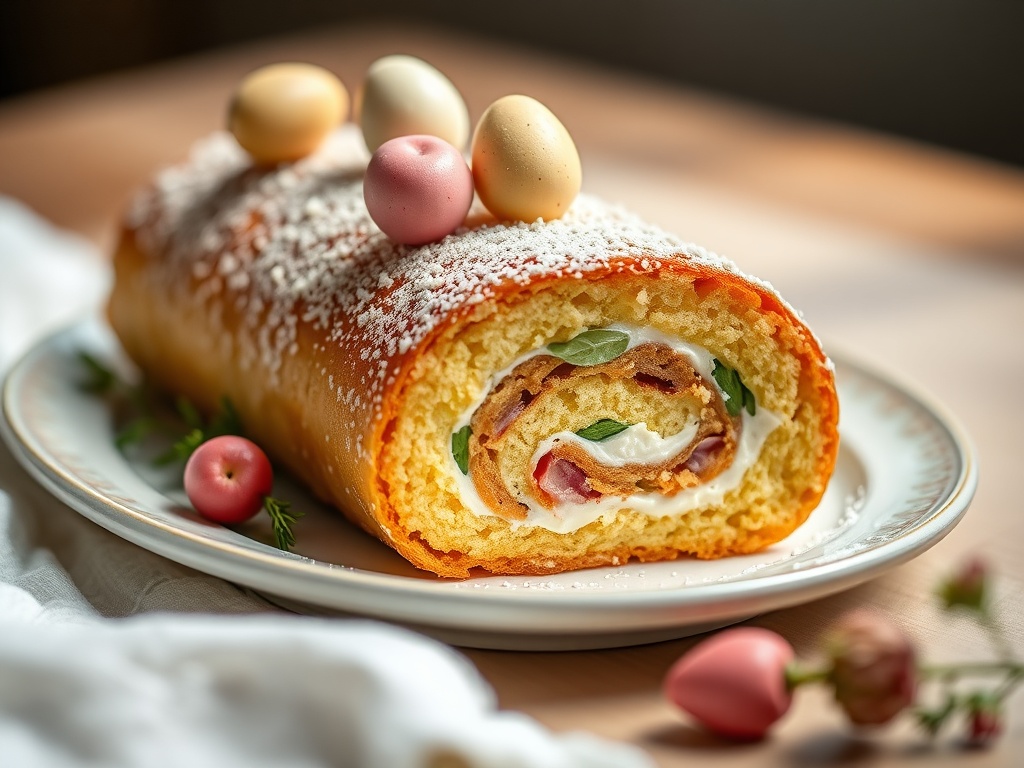
The arrival of Easter brings with it a symphony of pastel colors, fresh blooms, and, of course, delightful desserts. Among the many sweet treats gracing holiday tables, the Easter Cake Roll stands out as a true showstopper. This elegant dessert, often known as a Swiss roll or jelly roll, is a masterpiece of both flavor and presentation, offering a visually stunning spiral of tender cake enrobing a luscious, creamy filling. It’s a dessert that speaks of springtime renewal and the joy of shared celebrations, making it an ideal centerpiece for your Easter feast. Its delicate balance of a light, pliable cake and a rich, tangy filling creates a harmonious taste experience that is both comforting and sophisticated.
What makes the Easter Cake Roll particularly special is its versatility and its undeniable charm. Unlike a traditional layered cake that can sometimes feel heavy, the cake roll offers a lighter, airier alternative while still delivering on indulgence. Its elegant spiral, often revealed with a dusting of powdered sugar or a scattering of fresh berries, instantly elevates any dessert spread. This recipe is designed to help you achieve that picture-perfect result without requiring advanced pastry skills. We’ll guide you through each step, from baking the perfect pliable sponge to mastering the art of the roll, ensuring your Easter masterpiece is not only beautiful but also incredibly delicious and memorable for everyone at your holiday gathering.
Beyond its aesthetic appeal, the Easter Cake Roll offers a delightful contrast of textures and flavors. The cake itself is typically a light, airy sponge, designed to be flexible enough to roll without cracking, yet moist enough to melt in your mouth. This tender crumb provides the perfect canvas for a variety of spring-inspired fillings, most famously a rich and tangy cream cheese frosting. The combination of the sweet cake with the bright, slightly tart filling is utterly irresistible, making every slice a truly satisfying experience. Get ready to impress your family and friends with a dessert that looks as good as it tastes, creating a new and cherished tradition for your Easter celebrations.
Nutritional Information
Per serving (approximate values):
- Calories: 350
- Protein: 5g
- Carbohydrates: 45g
- Fat: 18g
- Fiber: 1g
- Sodium: 180mg
Ingredients
For the Sponge Cake:
- 1 cup (120g) all-purpose flour, sifted
- 1 teaspoon baking powder
- 1/4 teaspoon salt
- 4 large eggs, separated
- 1 cup (200g) granulated sugar, divided
- 1/4 cup (60ml) water
- 1 teaspoon vanilla extract
- 1/2 teaspoon lemon zest (optional, for a lemon cake roll)
- Powdered sugar, for dusting
For the Cream Cheese Frosting:
- 8 ounces (226g) cream cheese, softened
- 1/2 cup (113g) unsalted butter, softened
- 3-4 cups (360-480g) powdered sugar, sifted
- 1 teaspoon vanilla extract
- 1-2 tablespoons milk or heavy cream (as needed for consistency)
Instructions
- Preheat your oven to 375°F (190°C). Grease a 10×15-inch (25×38 cm) jelly roll pan. Line the pan with parchment paper, leaving an overhang on the short sides. Lightly grease the parchment paper as well.
- In a medium bowl, whisk together the sifted all-purpose flour, baking powder, and salt. Set aside.
- In a large bowl, using an electric mixer, beat the egg yolks with 3/4 cup (150g) of the granulated sugar until light, thick, and lemon-colored (about 3-5 minutes). Beat in the water, vanilla extract, and lemon zest (if using) until combined.
- Gradually add the dry ingredients to the egg yolk mixture, mixing on low speed until just combined. Do not overmix.
- In a separate clean, large bowl, beat the egg whites with an electric mixer on medium speed until soft peaks form. Gradually add the remaining 1/4 cup (50g) of granulated sugar, increasing the speed to high, and beat until stiff, glossy peaks form.
- Gently fold about one-third of the beaten egg whites into the cake batter to lighten it. Then, gently fold in the remaining egg whites until no streaks remain. Be careful not to deflate the mixture.
- Pour the batter evenly into the prepared jelly roll pan, spreading it to the edges. Bake for 12-15 minutes, or until the cake springs back when lightly touched and the edges are lightly golden.
- While the cake is baking, lay a clean kitchen towel or a fresh sheet of parchment paper on a flat surface. Dust it generously with powdered sugar.
- As soon as the cake comes out of the oven, immediately invert it onto the powdered sugar-dusted towel/parchment paper. Carefully peel off the parchment paper that was on the bottom of the cake.
- Starting from one of the short ends, carefully roll the warm cake and the towel/parchment paper together into a tight spiral. Place the rolled cake, seam-side down, on a wire rack and let it cool completely in its rolled shape, for at least 1 hour. This “trains” the cake to hold its shape and prevents cracking later.
- While the cake is cooling, prepare the cream cheese frosting: In a large bowl, beat the softened cream cheese and butter together with an electric mixer until smooth and creamy.
- Gradually add the sifted powdered sugar, 1 cup at a time, beating on low speed until combined, then increasing to medium speed until smooth. Beat in the vanilla extract. If the frosting is too thick, add milk or heavy cream 1 tablespoon at a time until desired spreading consistency is reached. Be careful not to overmix, as it can thin the frosting.
- Once the cake is completely cool, carefully unroll it. If it cracks slightly, don’t worry, the frosting will help hold it together.
- Spread the cream cheese frosting evenly over the surface of the cake, leaving about a 1/2-inch border along one of the short ends.
- Starting from the opposite short end (the one with frosting all the way to the edge), carefully and tightly re-roll the cake. Be gentle but firm to maintain a good spiral.
- Place the rolled cake, seam-side down, on a serving platter. Cover loosely with plastic wrap and refrigerate for at least 1-2 hours to allow the frosting to set and the cake to firm up, which makes slicing easier.
- Before serving, dust the top of the cake roll generously with additional powdered sugar, or decorate as desired. Slice with a sharp knife and serve chilled.
Cooking Tips and Variations
Achieving the perfect Easter Cake Roll is all about precision and timing. One of the most crucial tips is to ensure your cake is baked just right. An overbaked cake will be dry and brittle, making it prone to cracking when rolled. Keep a close eye on it during the last few minutes of baking; it should spring back gently when touched and not be overly browned. Another vital step is rolling the cake while it’s still warm. The heat makes the cake pliable and flexible, allowing it to conform to the spiral shape without breaking. Don’t wait too long, as a cooled cake will stiffen and crack. Dusting your kitchen towel or parchment paper generously with powdered sugar before rolling prevents the cake from sticking and adds a subtle sweetness to the exterior.
When it comes to the cream cheese frosting, ensure both your cream cheese and butter are at true room temperature. This is key for achieving a smooth, lump-free frosting. If they are too cold, your frosting will be lumpy; if they are too warm, it might be too runny. Beat the cream cheese and butter until light and fluffy before gradually adding the powdered sugar. Avoid overmixing the frosting once the powdered sugar is incorporated, as this can introduce too much air and make it thin, losing its stable consistency. If your frosting seems too soft, a quick chill in the refrigerator for 15-20 minutes can help it firm up.
The beauty of the Easter Cake Roll lies in its adaptability. For a vibrant lemon cake roll, increase the lemon zest in the cake batter to 1 tablespoon and add 1-2 tablespoons of fresh lemon juice to your cream cheese frosting for an extra citrusy kick. You can also incorporate a thin layer of lemon curd directly onto the cake before spreading the cream cheese frosting, adding another layer of bright flavor. For a delightful carrot cake roll, add 1 teaspoon of ground cinnamon, 1/2 teaspoon of nutmeg, and 1/4 teaspoon of ground ginger to the dry ingredients for the cake. You can also fold in 1/2 cup of finely grated carrots to the batter just before folding in the egg whites. For a touch of elegance, consider adding a thin layer of raspberry jam or apricot preserves before the cream cheese frosting for a fruity surprise. Garnish with fresh berries, edible flowers, or finely chopped pistachios for an extra festive touch.
Storage and Reheating
Proper storage is essential to maintain the freshness and integrity of your Easter Cake Roll, especially since it contains cream cheese frosting. Once assembled, the cake roll should be stored in an airtight container in the refrigerator. This prevents the cake from drying out and keeps the cream cheese frosting firm and safe to eat. When stored correctly, your Easter Cake Roll will remain fresh and delicious for 3-4 days. It’s best to keep it covered loosely with plastic wrap or in a cake dome to prevent it from absorbing any refrigerator odors.
Due to the nature of a cake roll and its cream cheese frosting, reheating is generally not recommended. The delicate sponge cake can become dry and tough when exposed to heat, and the frosting can melt or become oily, altering its texture and appeal. The Easter Cake Roll is designed to be enjoyed chilled or at cool room temperature. If you prefer it slightly less cold, you can remove it from the refrigerator about 15-20 minutes before serving to allow it to come to a slightly cooler room temperature, which can enhance the flavors and soften the cake slightly. However, avoid leaving it out at room temperature for extended periods, especially if your kitchen is warm, as the frosting will soften quickly.
If you have leftover slices, they should be returned to the refrigerator promptly. For the best flavor and texture, aim to consume the cake within the recommended storage period. Freezing a cake roll is also an option if you want to extend its shelf life. To freeze, wrap the entire cake roll (or individual slices) tightly in plastic wrap, then an additional layer of aluminum foil. It can be frozen for up to 1 month. To thaw, transfer the frozen cake roll to the refrigerator overnight. Once thawed, it should be consumed within 2-3 days. Keep in mind that the texture of the cake might be slightly altered after freezing and thawing, but it will still be delicious.
Frequently Asked Questions
What kind of cake is best for a cake roll?
A light, airy, and elastic sponge cake is ideal for a cake roll. Varieties like a genoise or chiffon cake work wonderfully because their structure allows them to be rolled without cracking. The key is a cake that is moist enough to be pliable but not so dense that it breaks. Our recipe uses a classic sponge that achieves this perfect balance, ensuring a smooth and elegant spiral every time.
Why did my cake roll crack when I tried to roll it?
Cracking is a common issue for beginners, but it’s usually due to two main reasons: the cake was either overbaked or it was allowed to cool too much before rolling. An overbaked cake will be dry and stiff, making it inflexible. The critical step is to roll the cake while it’s still warm and pliable, immediately after it comes out of the oven. The warmth helps the cake “train” into its spiral shape. If it cools completely before rolling, it will likely crack.
Can I make the cake roll ahead of time?
Absolutely! The Easter Cake Roll is an excellent make-ahead dessert, which is perfect for holiday planning. You can bake the cake and roll it in the towel/parchment paper, allowing it to cool completely in that shape. Once cooled, you can keep the rolled cake (still wrapped in the towel/parchment) at room temperature overnight, or even freeze it for a few weeks. The frosting can also be made a day in advance and stored in the refrigerator. Assemble the cake roll closer to serving time, ideally a few hours beforehand to allow it to chill and set properly after filling.
How do I prevent the cream cheese frosting from being too runny?
The secret to a stable cream cheese frosting lies in using softened, but not warm or melted, butter and cream cheese, and sifting your powdered sugar. Beat the butter and cream cheese until they are very light and fluffy before gradually adding the powdered sugar. Avoid overmixing once the powdered sugar is incorporated, as this can incorporate too much air and thin the frosting. If your frosting does seem too soft, don’t panic! Place it in the refrigerator for 15-30 minutes to firm up before spreading. A small amount of additional sifted powdered sugar can also help thicken it.