Introduction
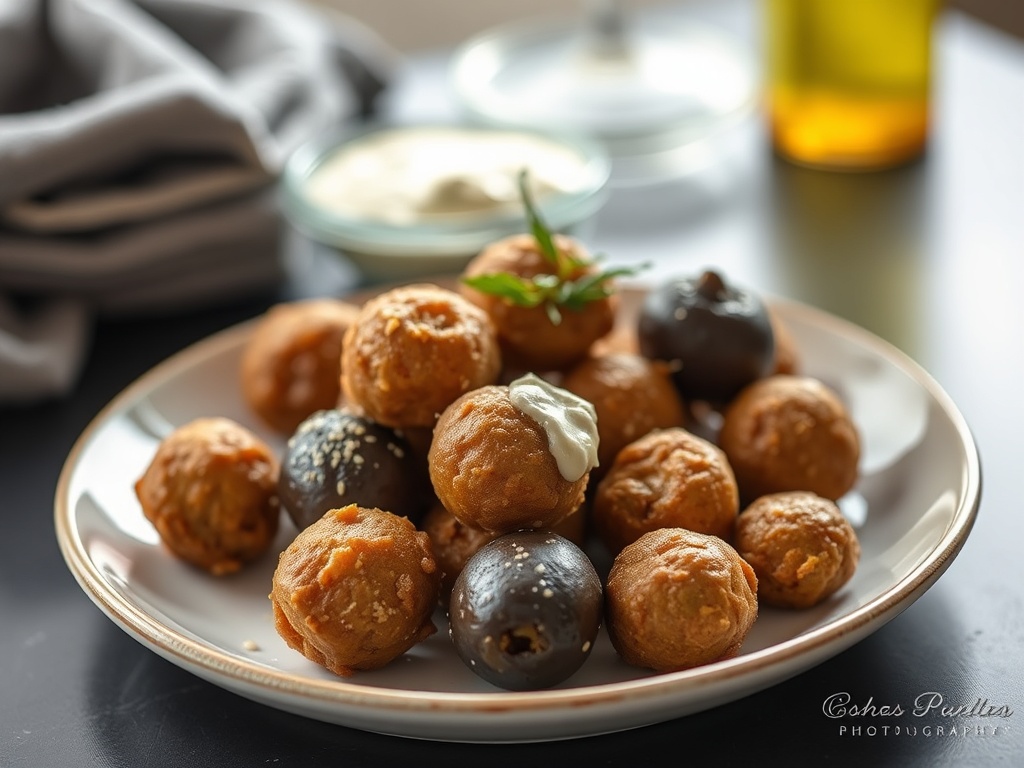
Imagine a symphony of textures and tastes dancing on your palate: the unexpected crunch of a golden, savory crust giving way to the tender, briny burst of a warm olive, all harmoniously embraced by the creamy, zesty allure of a homemade garlic aioli. This isn’t just an appetizer; it’s an experience, a delightful surprise that elevates the humble olive into a show-stopping culinary masterpiece. Fried olives, a concept that might initially raise an eyebrow, quickly become an irresistible addiction, offering a unique blend of salty, savory, and utterly satisfying flavors that are perfect for any occasion.
What makes fried olives so captivating? It’s the ingenious transformation of a familiar ingredient into something entirely new and exciting. The frying process intensifies the olive’s inherent brininess, while the crispy breading provides a textural contrast that is pure culinary genius. They’re incredibly versatile, serving as an elegant appetizer for a dinner party, a sophisticated snack for a casual gathering, or even a delightful accompaniment to cocktails. Despite their gourmet appeal, these crispy morsels are surprisingly straightforward to prepare, making them an accessible indulgence for home cooks of all skill levels.
But what truly elevates these golden nuggets of deliciousness is their indispensable companion: a vibrant, pungent garlic aioli. The rich, creamy texture and sharp, aromatic flavor of the aioli cut through the richness of the fried olive, creating a perfect balance that keeps you coming back for more. This pairing isn’t just complementary; it’s essential, transforming a simple fried snack into a truly memorable dish that promises to impress and delight anyone lucky enough to try it. Get ready to embark on a culinary adventure that will redefine your perception of the olive, turning it from a mere garnish into the star of the show.
Nutritional Information
Per serving (approximate values):
- Calories: 280
- Protein: 5g
- Carbohydrates: 18g
- Fat: 22g
- Fiber: 3g
- Sodium: 550mg
Ingredients
For the Fried Olives:
- 2 cups (approximately 12 oz) pitted green olives (Castelvetrano or Manzanilla recommended), well-drained and patted dry
- 1/2 cup all-purpose flour
- 1/2 teaspoon garlic powder
- 1/4 teaspoon dried oregano
- 1/4 teaspoon black pepper
- 2 large eggs, lightly beaten
- 1 1/2 cups panko breadcrumbs
- 1/2 teaspoon salt
- Vegetable, canola, or grapeseed oil for frying (approximately 4-6 cups, depending on pot size)
For the Garlic Aioli:
- 1 cup good quality, full-fat mayonnaise
- 3-4 cloves garlic, minced or grated (adjust to taste)
- 1 tablespoon fresh lemon juice
- 1 teaspoon Dijon mustard
- 1/4 teaspoon salt, or to taste
- 1/8 teaspoon black pepper, or to taste
- Optional: pinch of cayenne pepper or smoked paprika for a subtle kick
For Garnish:
- Fresh parsley, chopped
- Lemon wedges
- Flaky sea salt (optional)
Instructions
- Prepare the Olives: Ensure your pitted olives are thoroughly drained and, most importantly, patted bone-dry with paper towels. Any excess moisture will cause oil to splatter and prevent the breading from becoming truly crispy. If using unpitted olives, gently smash them with the flat side of a knife to remove the pit, then pat dry.
- Set Up the Breading Station: Prepare three shallow dishes or bowls for your breading station. In the first dish, combine the all-purpose flour, garlic powder, dried oregano, and black pepper. Whisk well to combine. In the second dish, lightly beat the two large eggs. In the third dish, combine the panko breadcrumbs and 1/2 teaspoon of salt, mixing them thoroughly.
- Bread the Olives: Working in small batches, dredge each olive first in the seasoned flour, ensuring it’s fully coated. Shake off any excess flour. Next, dip the floured olive into the beaten eggs, allowing any excess egg to drip off. Finally, roll the olive in the seasoned panko breadcrumbs, pressing gently to ensure a thick, even coating. Place the breaded olives on a clean plate or baking sheet as you go, making sure they don’t touch to prevent sticking. Repeat until all olives are breaded.
- Prepare the Garlic Aioli: In a small bowl, combine the mayonnaise, minced garlic, fresh lemon juice, Dijon mustard, salt, and black pepper. If desired, add a pinch of cayenne pepper or smoked paprika. Whisk vigorously until all ingredients are well combined and the aioli is smooth and creamy. Taste and adjust seasonings as needed. Cover and refrigerate until ready to serve, allowing the flavors to meld.
- Heat the Frying Oil: Pour enough frying oil (vegetable, canola, or grapeseed) into a deep, heavy-bottomed pot or Dutch oven to reach a depth of about 2-3 inches. Place the pot over medium-high heat. Attach a deep-fry thermometer to the side of the pot and heat the oil to 350-375°F (175-190°C). If you don’t have a thermometer, you can test the oil by dropping a tiny pinch of panko into it; if it sizzles vigorously and turns golden within 10-15 seconds, the oil is ready. Be patient and allow the oil to reach the correct temperature before frying.
- Fry the Olives: Carefully lower a small batch of breaded olives into the hot oil using a slotted spoon or spider. Do not overcrowd the pot, as this will lower the oil temperature and result in greasy, soggy olives. Fry for 2-3 minutes, turning occasionally, until the olives are deeply golden brown and crispy on all sides. The exact time will depend on your oil temperature and olive size.
- Drain and Season: Once golden, remove the fried olives from the oil with a slotted spoon and transfer them to a plate lined with several layers of paper towels to drain any excess oil. If desired, immediately sprinkle them with a pinch of flaky sea salt while they are still hot. Repeat the frying process with the remaining batches of olives, ensuring the oil returns to the correct temperature between each batch.
- Serve: Arrange the hot, crispy fried olives on a serving platter. Garnish with chopped fresh parsley and a few lemon wedges. Serve immediately with the chilled garlic aioli on the side for dipping. Encourage guests to squeeze a bit of fresh lemon juice over the olives for an extra burst of brightness.
Cooking Tips and Variations
Achieving perfect fried olives hinges on a few key techniques. First and foremost, the dryness of your olives is paramount. Any residual moisture will not only make the oil splatter dangerously but will also prevent the breading from adhering properly and crisping up. Pat them thoroughly with paper towels until they are absolutely dry. Secondly, maintaining the correct oil temperature is non-negotiable. Too low, and your olives will absorb too much oil, becoming greasy and heavy. Too high, and the breading will burn before the olive inside has sufficiently heated through, resulting in a bitter exterior and cold interior. Invest in a deep-fry thermometer for consistent results, and remember to fry in small batches to prevent the oil temperature from dropping too drastically.
For variations, consider experimenting with the type of olives. While Castelvetrano and Manzanilla offer a classic briny, buttery flavor, Kalamata olives can provide a more robust, fruitier note. Just be sure to find pitted versions or pit them yourself. The breading itself can be a canvas for creativity. Instead of or in addition to oregano, try dried thyme, rosemary, or even a pinch of smoked paprika for an earthy depth. For a spicier kick, mix a quarter teaspoon of red pepper flakes into the panko breadcrumbs. The aioli is also ripe for customization; roasted garlic can add a sweeter, mellower flavor profile, while a touch of fresh chives or dill can introduce a herbaceous freshness. You can even swap out the Dijon mustard for a spicier brown mustard if you prefer. For a slightly healthier take, these olives can be air-fried: after breading, lightly mist them with cooking spray or toss them with a teaspoon of oil, then air fry at 375°F (190°C) for 8-12 minutes, shaking the basket occasionally, until golden and crispy.
Storage and Reheating
Fried olives are best enjoyed immediately after frying when they are at their crispiest and warmest. However, if you have leftovers, they can be stored in an airtight container in the refrigerator for up to 2-3 days. The breading will inevitably lose some of its crispness during storage.
To reheat, the best method is to use an oven or an air fryer. Preheat your oven to 375°F (190°C) and spread the olives in a single layer on a baking sheet. Reheat for 8-12 minutes, or until heated through and the breading has re-crisped. In an air fryer, reheat at 350°F (175°C) for 5-8 minutes, shaking the basket halfway through, until crispy. Avoid reheating in a microwave, as this will make them soggy and detract from their texture. The garlic aioli can be stored separately in an airtight container in the refrigerator for up to 5-7 days.
Frequently Asked Questions
Can I use unpitted olives for this recipe?
While you can use unpitted olives, it’s highly recommended to pit them first for a more enjoyable eating experience. You can easily remove pits by gently smashing the olive with the flat side of a chef’s knife and then extracting the pit, or by using a cherry pitter. Just remember to pat them very dry afterward.
What’s the best type of oil for frying?
For frying, you want an oil with a high smoke point and a neutral flavor. Vegetable oil, canola oil, grapeseed oil, and sunflower oil are all excellent choices. Olive oil, especially extra virgin, has too low a smoke point and will burn, imparting an unpleasant flavor to your fried olives.
Can I make the breading ahead of time?
You can bread the olives up to a few hours in advance. After breading, arrange them in a single layer on a baking sheet, cover loosely with plastic wrap, and refrigerate until ready to fry. This can help the breading adhere better. However, for the absolute best crispiness, frying them immediately after breading is ideal. The garlic aioli can definitely be made a day or two ahead and stored in the refrigerator; its flavors often improve with a little time to meld.
Why are my fried olives not crispy?
There are a few common culprits for soggy fried olives. The most frequent reason is insufficient oil temperature – if the oil isn’t hot enough, the breading will absorb oil instead of crisping. Ensure your oil is consistently between 350-375°F (175-190°C). Another major factor is moisture on the olives; they must be bone dry before breading. Overcrowding the pot can also drop the oil temperature too quickly, leading to less crispy results. Finally, ensure you’re using panko breadcrumbs, as their larger, flakier texture is key for that signature crunch compared to regular breadcrumbs.